
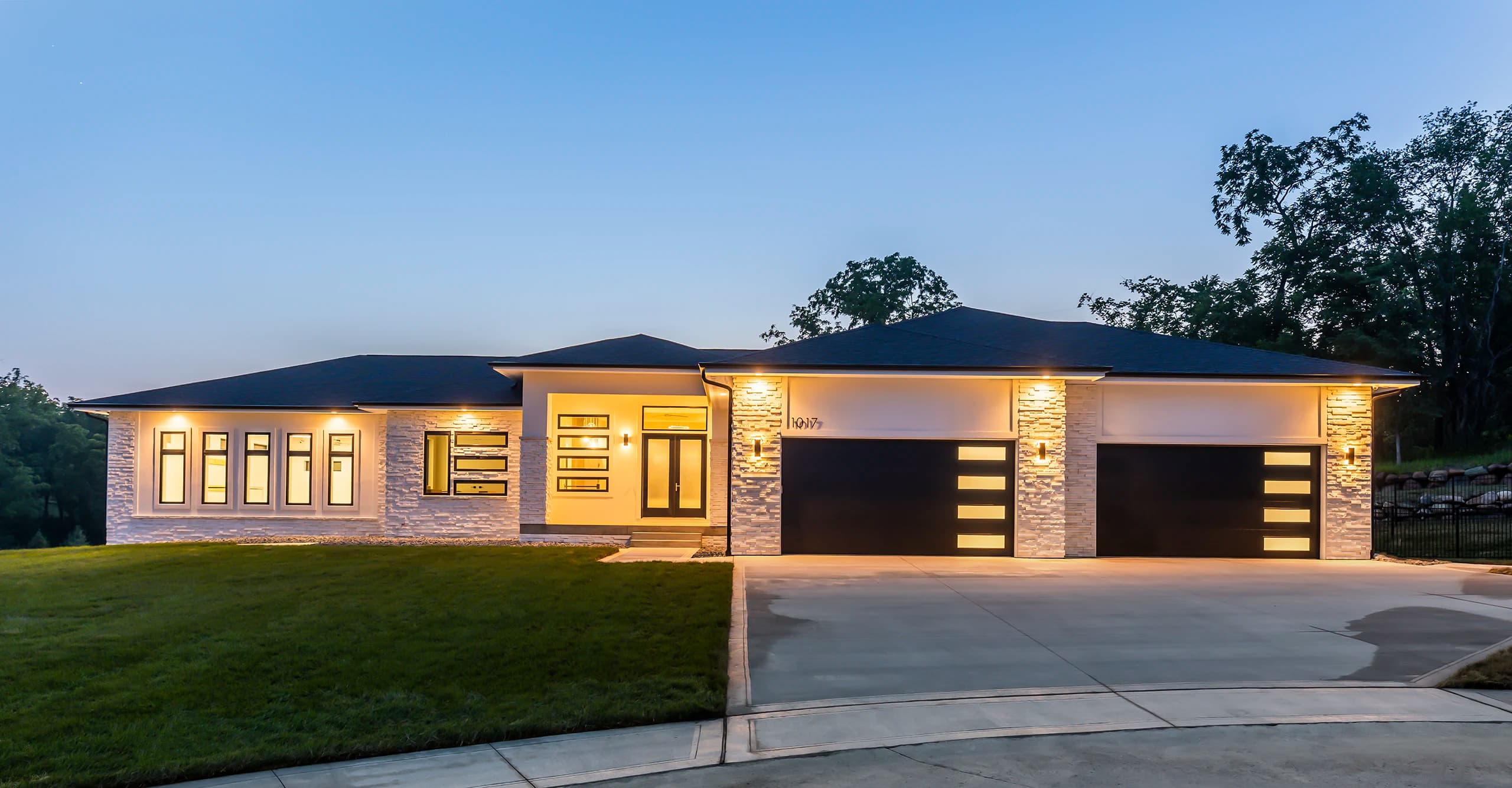
Building a custom home in the Des Moines metro is a 12 to 24 month commitment that starts long before you pick a builder. The decisions you make in the first six weeks — about lot, budget, scope, and partners — set the ceiling for what the rest of the project can become. Get those right and the rest is execution. Get them wrong and no amount of craftsmanship later will recover the gap.
This guide is the conversation we have with families who reach out for a consultation. It's not exhaustive — every lot, every family, and every neighborhood has wrinkles — but it covers the questions we hear most often, in roughly the order they come up.
Step one — get honest about budget bands
The first question most prospective clients ask is "what does a custom home cost?" The honest answer is "it depends" — but only because the answer depends on real, knowable variables. Lot cost, square footage, finish level, complexity of the design, and current material + labor markets all matter.
Before our first sit-down, it helps to think in bands rather than precise numbers. Are you in the $850K-$1.2M build-cost range, the $1.2M-$2M range, or above $2M? You don't need certainty, just an honest comfort zone. From there we can show you what a build in your band actually buys in this market — and just as importantly, what it doesn't.
Step two — lot first, plans second
We get this question constantly: "should we work on plans or buy a lot first?" The answer is almost always lot first. The lot dictates the floorplan more than most people realize — slope, orientation, soils, setbacks, easements, view lines, and HOA architectural controls all shape what's possible. Designing in the abstract and then trying to wedge the result onto a specific parcel is a recipe for compromise.
We're happy to walk a lot with you before you close on it. We've flagged enough red flags over 18 years that this single hour can save tens of thousands of dollars in rework or, occasionally, save you from buying the wrong lot entirely.
Step three — square footage versus quality
Most people overestimate how much square footage they actually need and underestimate how much quality matters in the spaces they use every day. A 4,500 sf home built to MIR standards lives bigger and better than a 6,000 sf home built to spec-builder standards.
When we're scoping with you, we'll often suggest taking 500 to 1,000 sf out of the program and putting that money into the kitchen, the primary suite, the outdoor living spaces, and the structural and envelope details that determine how the home performs for the next thirty years. The right tradeoff varies by family. The conversation is worth having.
Step four — choose your partners deliberately
A custom home is the work of a triangle: client, architect, builder. How that triangle communicates, who leads which decisions, and how disagreements get resolved is at least as important as the individual talent of each leg.
We work in a few different configurations. Sometimes a client comes in with an architect already retained. Sometimes we suggest one of our trusted architects. Occasionally we design-build with our own team. Each model has tradeoffs in cost, control, and timeline. There is no universal right answer — just the right answer for your situation.
Step five — plan for surprises (because they're coming)
Every custom home project encounters at least three or four genuine surprises that nobody could have foreseen at contract signing. A soils report that comes back uglier than expected. An inspector flagging something that requires a structural rework. A material lead time stretching from 6 weeks to 16. A homeowner falling in love with a cabinetry detail mid-build that adds $40K.
Build a 5-10% contingency into your budget at signing. Hold it as sacred. Talk through every change order honestly. The project that finishes on budget is not the project that started without surprises — it's the project that handled them with a real contingency and a builder who flagged them honestly when they came up.
What to ask any builder you interview
- How many homes do you build per year? (Smaller is usually better for true custom.)
- Can I see three completed homes from the last 24 months and talk to those owners?
- Who is my single point of contact during the build?
- How are change orders priced and approved?
- What does your typical project payment schedule look like?
- How do you handle warranty and post-occupancy issues?
- Who are your three most-trusted trade partners and how long have you worked together?
If a builder can't answer those crisply, you have your answer about whether they belong on your shortlist.
Where MIR fits
We're small on purpose. We build a small number of homes each year so we can be on every site weekly, take every client call ourselves, and stake our name on every detail. We're not the biggest custom builder in the metro and we don't plan to be. If that approach matches the kind of partner you're looking for, we'd love to talk.