
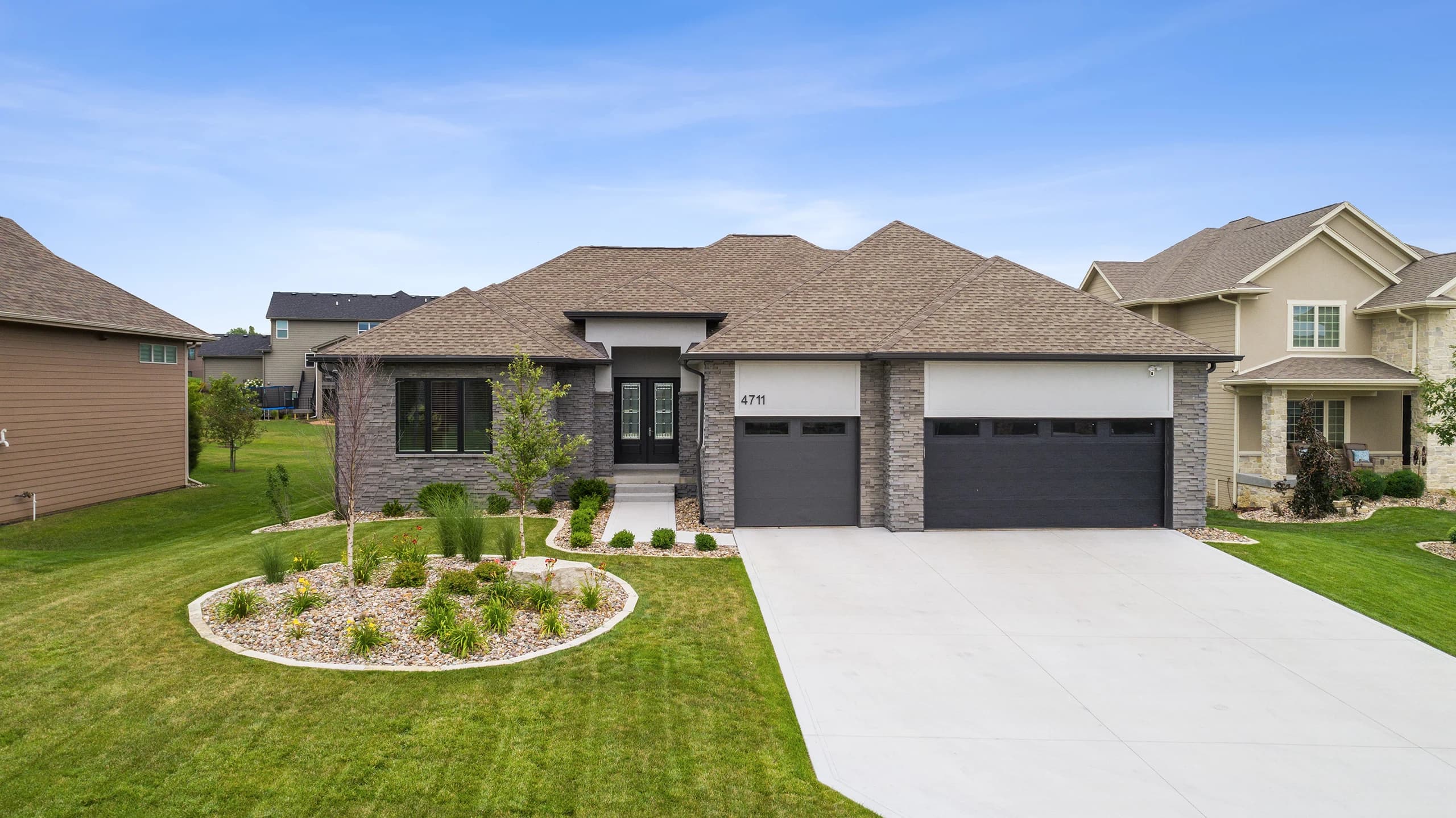
The lot is the single biggest decision before construction starts. It dictates floorplan, foundation cost, view lines, the kind of homes that surround you, and ultimately the resale ceiling for whatever you build. We've walked hundreds of lots across the Des Moines metro over the last 18 years. Here's what we look at, in roughly the order it matters.
Soils and topography
The first thing we walk on a prospective lot is the dirt. Soil composition, water table depth, slope, and drainage all dictate foundation cost. A lot that looks beautiful from the street can cost $50K-$120K more to build on than a flat parcel two blocks away if the soils are poor or the slope demands a walkout foundation that wasn't planned.
Before you close, get a soils report. The $1,500-$3,000 you'll spend is the cheapest insurance available against a six-figure foundation surprise.
Setbacks, easements, and HOA controls
Every lot has invisible boundaries inside the visible boundaries. Setbacks dictate how close you can build to property lines. Easements (utility, drainage, access) carve out areas where you can't build at all. HOA architectural review committees often have opinions on roof pitch, exterior materials, square footage minimums and maximums, garage placement, and more.
Pull the plat, the easement records, and the HOA architectural guidelines BEFORE you write the offer. We can help you read them. Several times we've seen families fall in love with a lot only to discover the buildable envelope is too small for the home they were imagining.
Orientation and view lines
Where the sun rises, where it sets, and what you see from each room matters more than people expect. A south-facing great room with a view of mature trees feels different in February than a north-facing room with a view of the neighbor's siding.
We walk every lot at multiple times of day when possible. Morning light, afternoon shadow, evening view. The home you build will live with these conditions for the next thirty years.
The neighborhood character
Look at the houses next door, across the street, and on the next block. Are they being maintained? Are values rising? Is this neighborhood the kind of place that protects what you build, or the kind of place that will eventually drag your home's value down?
In the western Des Moines metro, neighborhoods like established sections of Clive, the wooded subdivisions of West Des Moines, and the newer cul-de-sacs of Waukee and Urbandale all have their own characters. We can speak to most of them — we've built across the metro for nearly two decades and know the patterns.
Schools and resale signals
Even if you're past the school years yourself, the school district affects resale. Buyers of luxury homes care. The Waukee, West Des Moines, and Urbandale Community School Districts each carry their own market premiums.
Utilities, services, and fiber
Confirm before close: gas service, sewer (vs. septic), water pressure, electrical capacity, and broadband. A surprising number of metro lots — especially acreage builds in Dallas County — still require fiber drops or have only DSL. Discuss with the seller and utility companies what's actually buildable to.
The "buy or pass" gut check
After the technical due diligence, ask yourself one question:Can I picture us actually living here? Not just the house we'd build — the lot, the street, the neighbors, the school bus stop, the morning walk. If the answer isn't yes, the technical details don't matter. Pass and find another lot.
We're happy to walk a lot with you before you make an offer. That hour of our time, free, is one of the most valuable conversations a prospective client can have with us. Reach out before you sign.